



Beyond the Screen: 5 Simple Ways to Help Children Reconnect
Beyond the Screen: 5 Simple Ways to Help Children Reconnect with the Real World
Every parent is familiar with this situation. Your child is sitting with a tablet, smartphone, or gaming console, completely absorbed in what is happening on the screen. You call their name once, twice, and perhaps a few more times before getting a response. And when you finally say, “It’s time to put the screen away,” it may lead to an argument, disappointment, or the familiar question, “What am I supposed to do now?”
Managing screen time has become one of the common challenges of modern parenting. While digital devices offer children opportunities to learn, explore, and stay entertained, spending too much time in front of screens can leave them with fewer opportunities to engage in physical activities, develop practical skills, and interact with the people around them.
As parents, we often look for ways to encourage our children to spend less time on devices. But perhaps the solution is not simply to take technology away. It is to introduce them to experiences that make the world beyond the screen equally interesting.
At Reeds World School – CBSE, Coimbatore, we believe that meaningful learning extends beyond textbooks and classroom lessons. Children’s everyday experiences, interactions, creative activities, and opportunities to explore play an important role in shaping their overall development.
One simple approach parents can try at home is known as Stealth Redirection – encouraging children to shift their attention from screens to engaging real-world activities without making the transition feel like a punishment.
What Is Stealth Redirection?
Stealth redirection is a simple parenting approach that encourages children to move their attention from digital entertainment towards meaningful everyday experiences.
Instead of saying, “You have been playing on your tablet for too long. Go and do something else,” parents can introduce an activity that sparks curiosity and makes children feel involved.
For example, instead of asking your child to leave a game, you could say, “I have an interesting idea for a weekend project. Would you like to help me bring it to life?”
The difference may seem small, but the experience can be very different for a child.
Children enjoy activities that allow them to make decisions, solve problems, experiment, and see the results of their efforts. These experiences also help develop important qualities such as independence, creativity, confidence, and problem-solving abilities.
Here are five simple activities parents can introduce at home to encourage children to explore beyond screens.
5 Interesting Home Activities That Can Help Children Spend Less Time on Screens
1. Let Your Child Become the Little Master Chef
The idea: Turn an ordinary cooking session into an exciting family activity.
Invite your child into the kitchen and give them a few safe, age-appropriate ingredients. Challenge them to come up with a new snack, prepare a simple salad, or help create a special dish for the family.
You could even give them the freedom to name their creation!
Why children enjoy it: Cooking gives children an opportunity to experiment, make decisions, and learn through their senses. They get to see, touch, smell, and taste what they create. It also introduces practical lessons in measuring, counting, following instructions, and understanding healthy food choices.
Such activities encourage children to apply what they learn in school to everyday situations, making learning more meaningful and enjoyable.
Try saying: “I am planning something special for our evening snack. How about we create a new recipe together? You can be the chef today!”
2. Give Them a Special Responsibility at Home
The idea: Give your child an opportunity to take ownership of a small family responsibility.
It could be planning the weekend menu, arranging the bookshelf, looking after indoor plants, organising a family outing, or helping care for a pet.
Allow them to make decisions and take responsibility for completing the task.
Why children enjoy it: Children feel valued when their opinions matter and their contributions are appreciated. Giving them responsibilities helps develop independence, decision-making abilities, confidence, and a sense of belonging.
It also teaches them that being part of a family means contributing and helping one another.
At a school that values holistic development, these everyday experiences are equally important because education is not limited to academic achievement. Learning to take responsibility, work independently, and respect others are essential life skills.
Try saying: “We are planning a family outing this weekend, and I would love you to be in charge of planning it. Where do you think we should go?”
3. Encourage Them to Build, Create, and Fix Things
The idea: Introduce simple hands-on projects that allow children to use their imagination and practical skills.
You could build a cardboard house, create a bird feeder, assemble a simple model, make a paper aeroplane, or work together on a small DIY project.
Even helping you organise or fix something around the house can become an interesting learning experience.
Why children enjoy it: Building and creating things encourage children to think, experiment, and find solutions when something does not work as expected. These activities develop creativity, patience, problem-solving abilities, and hand-eye coordination.
More importantly, children experience the satisfaction of creating something with their own hands.
Experiential learning plays an important role in a child’s education. At Reeds World School, CBSE, Coimbatore, we recognise the value of encouraging children to explore ideas, think independently, and learn through meaningful experiences both inside and outside the classroom.
Try saying: “I have an interesting project in mind, and I need a creative partner. Shall we see what we can build together?”
4. Turn Everyday Activities into Fun Challenges
The idea: Make ordinary household activities more interesting by turning them into small challenges.
For example, ask your child to organise their bookshelf by category, arrange their toys creatively, sort their stationery, or find a better way to organise their study space.
You can introduce a treasure hunt, a puzzle challenge, or a simple family competition to make the experience more exciting.
Why children enjoy it: Children naturally enjoy discovering patterns, solving problems, and completing challenges. Activities like these encourage logical thinking, organisation, observation, and decision-making.
They also help children understand the importance of keeping their surroundings organised.
These skills complement classroom learning by giving children opportunities to apply their reasoning and thinking abilities in everyday situations.
Try saying: “I wonder if you can turn this messy bookshelf into the most organised bookshelf in the house. You can decide how you want to arrange everything!”
5. Encourage Them to Become Creators, Not Just Viewers
The idea: If your child enjoys watching videos, playing games, or exploring digital content, encourage them to use that interest as inspiration for something creative.
They could write and illustrate a short comic book, create a story using their favourite toys, make a handmade board game, build something using building blocks, or create a simple stop-motion animation.
Why children enjoy it: This approach allows children to explore their existing interests while developing creativity, communication, imagination, and storytelling skills.
Instead of simply watching someone else’s creation, they get the opportunity to express their own ideas and bring them to life.
It also teaches children that technology can be used as a tool for creativity and learning, rather than only as a source of entertainment.
Try saying: “You have so many interesting ideas when it comes to games and stories. Why don’t we create something of our own this weekend?”
Three Important Things Parents Should Keep in Mind
Introducing new activities is a wonderful starting point, but the way parents approach them also makes a difference. Here are three simple things to remember.
1. Make the Transition Gradual
Children may find it difficult to move immediately from an exciting video game or television programme to a quiet activity such as reading or writing.
Instead of expecting an instant change, give them a gentle reminder before screen time ends. Start with something active, creative, or hands-on before introducing quieter activities.
A little patience can make the transition much easier.
2. Make Them Feel Involved, Not Instructed
Children are more likely to participate when they feel that they are part of a decision rather than simply following instructions.
Instead of assigning activities, give them choices. Ask what they would like to create, which responsibility they would enjoy taking up, or how they would like to spend their free time.
When children feel heard and valued, they are more likely to participate willingly.
3. Be a Part of Their Activities
Children learn a great deal by observing their parents. If we encourage them to spend less time on devices while we continue looking at our own phones, it becomes difficult to set a consistent example.
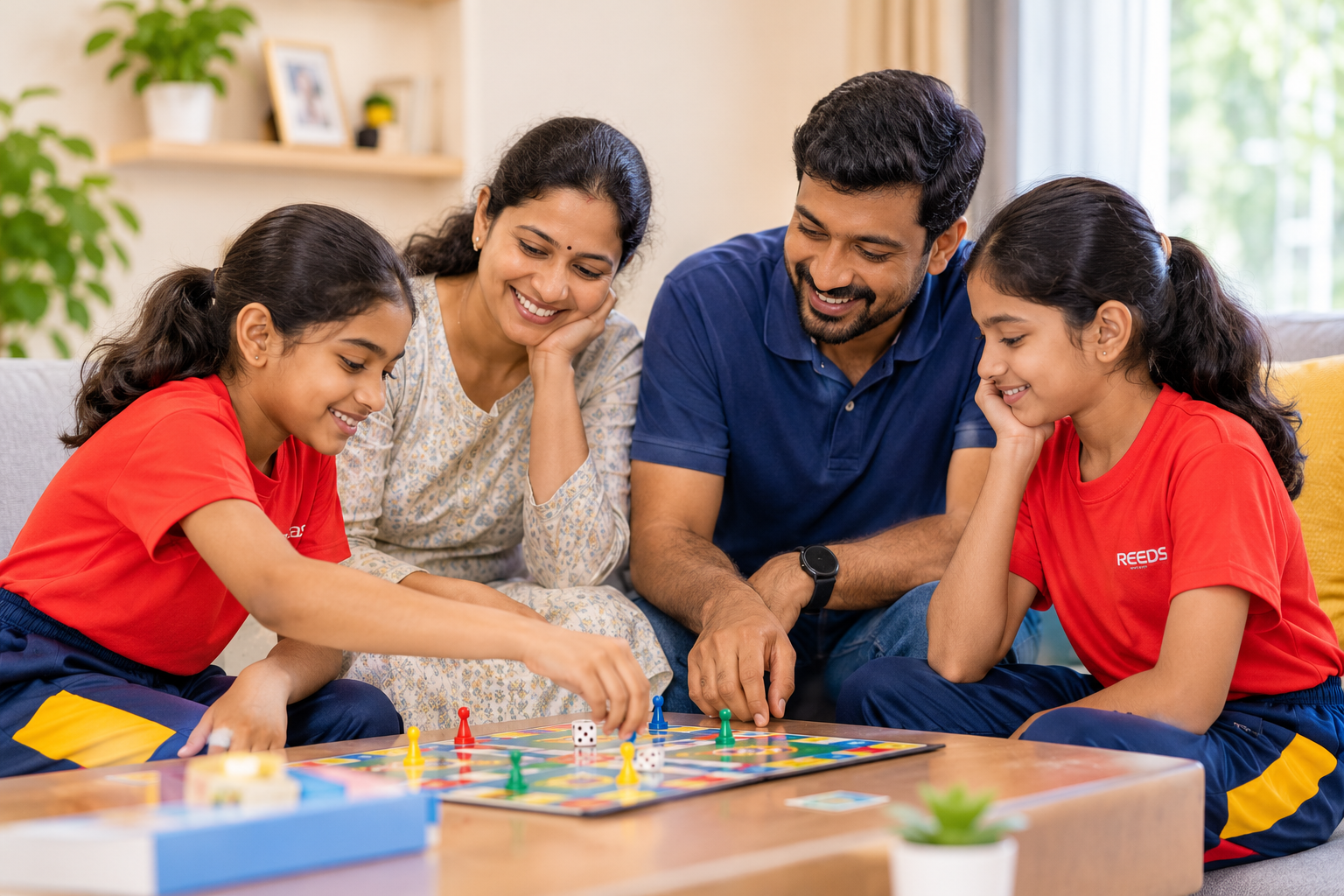
Try keeping aside some time to cook together, play a board game, go for a walk, work on a creative project, or simply have a conversation.
These shared experiences do more than keep children occupied. They create opportunities for bonding, communication, and lasting family memories.
Learning Beyond the Classroom: Building a Balanced Childhood
Technology is an important part of the world our children are growing up in. Completely avoiding digital devices may not be practical, nor is it always necessary. What matters is helping children understand how to use technology responsibly while making time for other meaningful experiences.
As parents and educators, we share the responsibility of helping children develop a healthy balance between digital engagement and real-world learning.
At Reeds World School – CBSE, Coimbatore, we believe that a child’s growth should extend beyond academic achievement. Opportunities to explore, communicate, collaborate, participate in activities, and develop practical skills contribute to a more meaningful learning journey.
For parents exploring CBSE schools in Coimbatore, it is worth remembering that a child’s education is shaped not only by what they learn from textbooks but also by the experiences that help them become confident, independent, and responsible individuals.
A simple cooking session, a weekend gardening activity, a family board game, or an afternoon spent building something together can become a wonderful learning experience.
Because some of the most valuable lessons children learn do not come from a screen. They come from experiencing life itself.
Reeds World School – CBSE, Coimbatore | Nurturing young minds through meaningful learning experiences.