



How to Make Your Child More Capable | A Parent’s Guide to Raising Confident, Independent Children
Between morning school drop-offs, evening homework sessions, and juggling a dozen different activities, most of us have paused at least once, took a quiet breath, and wondered: Am I actually doing this right? How do I make sure my child grows up ready to face the world on their own?
We all share the same big dreams for our kids. We want them to feel confident, build healthy friendships, make smart decisions, and eventually step out into the world as independent, thoughtful adults.
But somewhere between managing schedules and checking off daily to-dos, a deeper question keeps coming up for many of us:
“How do we raise a truly capable child?”
When we worry about this, our instinct is often to add more. More study hours? Better grades? Another after-school activity? A stricter routine?
It’s completely natural to lean into those things, but deep down, we know a report card full of top marks doesn’t automatically mean a child knows how to handle a tough day, speak up for themselves, or bounce back when things don’t go as planned.
The truth is, capability isn’t about how much a child knows or how full their calendar is. A truly capable child feels safe enough to try, fail, and try again. It’s a child who learns how to speak their mind, work through a disagreement on the playground, make a choice, and navigate everyday life with growing self-belief. Capability isn’t a subject taught in a single lesson—it’s a mindset built over time.
These qualities don’t appear overnight, nor do they happen by accident. They are shaped quietly, day by day, through the small moments we share at home, the experiences they have in the classroom, and the partnership we build together between family and school.
What Does “Capability” Actually Look Like in Real Life?
When we picture a “capable” child, it’s easy to imagine the student standing confidently on stage at assembly or bringing home straight A’s. And while those moments are certainly wonderful to celebrate, real capability runs much deeper than report cards and gold stars.
True capability shows up in the quiet, everyday moments. It’s in the confidence to raise a hand and say, “I don’t know the answer yet, but I’m going to try to figure it out.”
It’s watching them wrestle with a tricky assignment, take a breath, and stick with it a little longer instead of throwing their hands up. It’s knowing they can ask for help when they’re stuck, or accept a bit of constructive feedback without feeling like they’ve failed.
A capable child learns to put their feelings into words, take care of their own school bag, and own up to their mistakes when things go wrong. Bit by bit, they stop looking to us for every single choice and start trusting their own judgment.
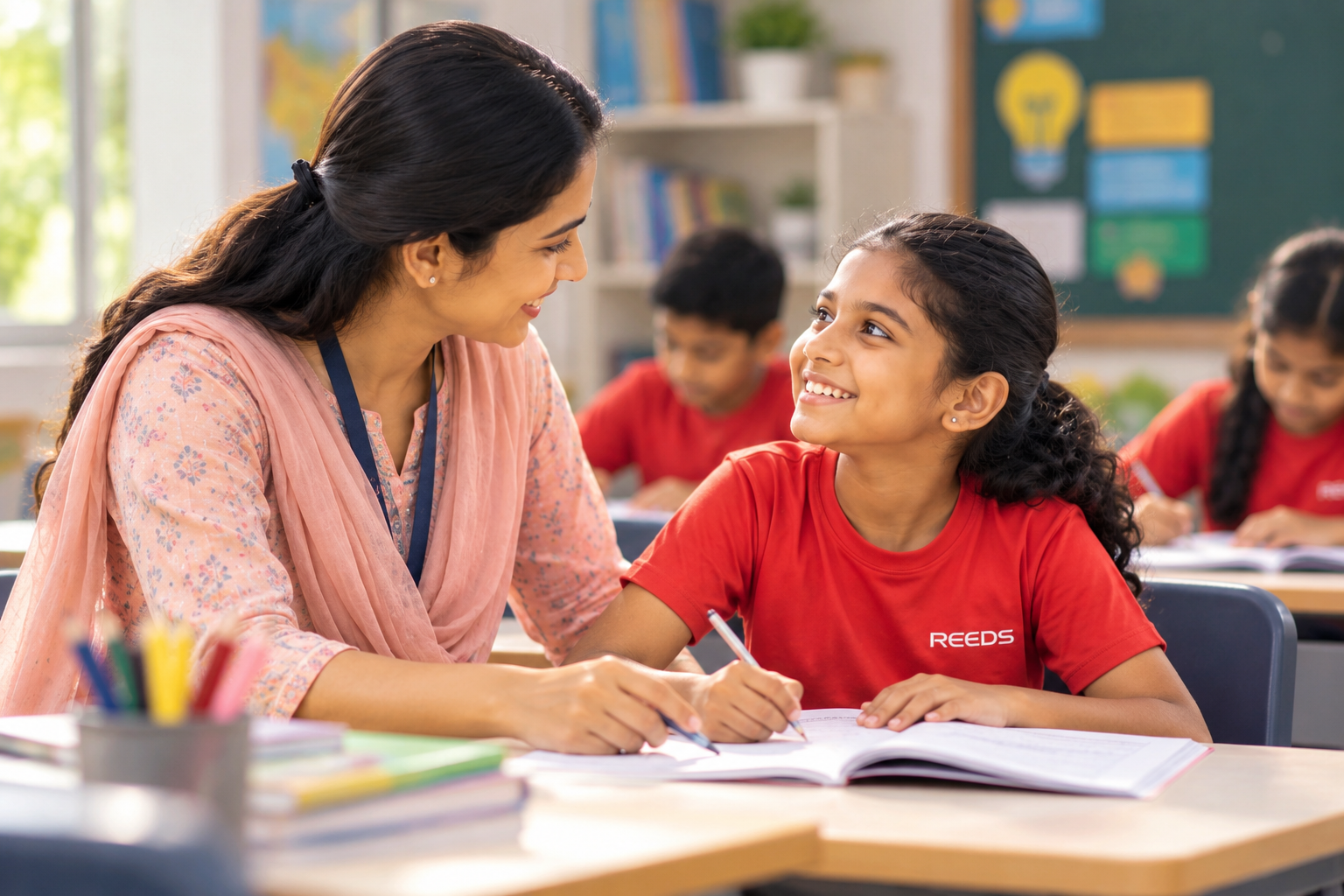
At the end of the day, that’s the vision we hold close at Reeds World School. We aren’t just nurturing students who can pass the next exam—we are partnering with you to raise young people who are truly ready for life.
1. The Art of Stepping Back: Let Children Do Things for Themselves
Let’s be honest: one of the simplest ways to help our children grow is also one of the hardest things for us as parents to actually do—stepping back.
It comes from a place of pure love. We step in to pack their school bags, track down lost water bottles, offer five gentle reminders about homework, and sometimes even answer questions for them before they’ve had a chance to speak. It’s fast, it keeps the morning running smoothly, and it saves them from getting overwhelmed.
But every time we jump in to handle a task our kids are ready to try on their own, we unintentionally take away a little piece of their practice ground.
Building capability doesn’t require drastic changes. Start with the small, everyday routines:
- Let them pack their own school bag for the next day.
- Encourage them to lay out their uniform before bed.
- Give them ownership at home—whether that means tidying up toys for little ones or handing simple household responsibilities to older children.
Will the bed sheets be tucked in smoothly? Probably not. Will they forget a notebook once or twice? Almost certainly.
And that is completely okay. Capability isn’t about perfection right out of the gate—it’s built through the messy, everyday habit of trying again.
2. Teach Them to Think Instead of Always Giving Answers
If you’re a parent, you’re probably no stranger to the endless stream of questions: “Why is this like that?”, “How does this work?”, or “What should I do now?”
When we’re busy making dinner or rushing to finish an errand, the easiest option is to just give them the direct answer and keep moving. But now and then, try pausing and throwing the question gently back to them:
- “What do you think?”
- “How do you think we could solve this?”
- “Why do you think that happened?”
These tiny shifts in daily conversation do something powerful: they teach children to trust their own minds instead of always looking for an adult to hand them the solution.
This is the exact same mindset we cultivate at Reeds World School. Through hands-on experiments, group discussions, and open-ended problem-solving, classroom learning is designed to encourage curiosity over simple memorisation.
Real life doesn’t come with an answer key at the back of the book. Raising a child who knows how to think—rather than just what to think—gives them the confidence to navigate any unfamiliar situation they might face.
3. Don’t Be Afraid of Their Mistakes
It breaks our hearts to watch our children struggle or experience disappointment. Our natural reaction is to step in, buffer the fall, and protect them from making mistakes in the first place.
It comes from love, but when kids grow up in an environment where mistakes feel like catastrophic failures, they become terrified to try. They start hesitating to raise their hands, worrying about getting an answer wrong, over-anxious about losing a game, or terrified of letting us down.
We can change that narrative at home simply by shifting the questions we ask at the end of the day. Instead of focusing only on “Did you get full marks?” or “Did you win?”, try asking:
- What felt a bit tricky today?
- What did you learn from that experience?
When we reframe these moments, everyday setbacks turn into invaluable growth:
- A low mark on a test isn’t a dead end—it’s just a helpful map showing us where they need a little extra support.
- Losing a sports match builds emotional resilience in a way winning never can.
- Forgetting a project file or water bottle teaches personal responsibility far better than any gentle lecture.
We don’t need to throw a party when things go wrong, but we can create a safe landing pad. Showing our children that a mistake isn’t a reflection of their worth—just a step in the learning process—gives them the courage to keep trying.
4. Give Them Opportunities Beyond Academics
It’s completely natural for us to give academics top priority. In the daily rhythm of family life, homework, exam dates, and grades take up a lot of our bandwidth.
While a solid academic foundation is essential, textbooks only tell part of a child’s story. True capability emerges when children get the chance to discover who they are outside the classroom walls.
- Sports build physical grit, teach teamwork, and show them how to handle both winning and losing with grace.
- Art, drama, and music nurture creativity and give them a healthy outlet to express thoughts they might not know how to say out loud.
- Clubs and public speaking build real-world confidence and help timid voices speak up.
- Leadership roles and outdoor activities teach initiative, responsibility, and how to adapt when things don’t go according to plan.
This is why CBSE Schools like Reeds World School in Coimbatore place as much emphasis on holistic, co-curricular experiences as they do on classroom learning.
We see this magic happen all the time: a child who feels quiet during a classroom lesson suddenly blossoms into an encouraging leader on the sports field or shines on stage during a theater workshop. Another might find their true passion in a robotics lab or through a collaborative group project.
Our kids won’t discover all their talents on a printed page. Every child carries a unique set of strengths—they just need the right environment and opportunities to bring them to light.
5. Teach Responsibility, Not Just Obedience
There is a subtle but profound difference between a child who simply obeys instructions and a child who genuinely understands responsibility.
Rules are necessary, of course. We all want our children to listen, stay safe, and respect boundaries. But as they grow, our real goal shifts: we want them to understand the why behind those boundaries so they can start taking true ownership of their choices.
This transition from compliance to ownership doesn’t happen through lectures. It happens in the unscripted, everyday moments at home:
- If they make a mess, involve them in cleaning it up instead of quietly fixing it after they walk away.
- If they forget a project or sports kit, guide them through a quick plan on how to remember it next time rather than rushing in to rescue them every single time.
- If they make a commitment—whether it’s sticking with a school club for the term or keeping a promise to a friend—encourage them to follow through.
- If a mistake affects someone else, gently teach them how to own it, apologize, and make things right.
Teaching compliance might make our daily routines smoother in the short term, but teaching responsibility builds character for the long haul. That sense of personal accountability is something no report card can measure, but it is one of the greatest gifts we can offer them.
6. Teach Them to Communicate
When we think about capability, we often picture a child working independently or solving a problem on their own. But true capability is also deeply tied to how well a child can express what’s happening on the inside.
Real emotional maturity doesn’t mean having all the answers—it’s having the confidence to say out loud:
- I don’t understand this yet.
- I need a little help.
- I respectfully disagree.
- I made a mistake, and I’m sorry.
- I have an idea I’d like to share.
None of these statements is signs of weakness. In fact, they are strong indicators of emotional intelligence and self-awareness.
As parents, we can build this confidence by making our homes a safe space for open dialogue. It sounds simple, but in the middle of a busy day, it takes practice:
- Pause before responding. When your child is upset or expressing a difficult thought, resist the immediate urge to correct, lecture, or jump straight into fix-it mode.
- Listen to understand, not just to answer. Give them time to finish their thought, even if they’re stumbling over their words.
- Help them name their emotions. If they are feeling overwhelmed or frustrated, guide them to find the right words to describe what they are experiencing.
When children know that their voice is valued at home, they don’t just become better communicators with us—they step out into the world with the confidence to speak up respectfully with teachers, peers, and eventually, future leaders and mentors.
7. Build Confidence Through Real Experiences
We can tell our kids how capable and amazing they are all day long—and they certainly need to hear our love and support. But true, lasting self-belief doesn’t come from pep talks alone. It comes from real-world experience.
A child becomes genuinely confident when they push through something hard, come out on the other side, and realize: “I actually did that.”
It’s that quiet, breakthrough moment of pride when they finally:
- Master a tricky assignment they were ready to give up on.
- Stand up to speak in front of a group, despite having butterflies in their stomach.
- Learn to swim, ride a bike, or solve a tough problem through trial and error.
- Step up to help a younger sibling or navigate a disagreement with a friend.
This is why children need real, meaningful opportunities to get involved and test their abilities.
We at Reeds World School believe a supportive school environment plays a huge role here. Our job as parents and educators isn’t to clear every single hurdle out of their path, but to give them safe spaces to try, collaborate, lead, explore—and yes, even struggle a little bit along the way.
Because when a child experiences the genuine thrill of saying, “I found a way to do this on my own,” that confidence isn’t just something they were told. It becomes something real that no one can ever take away from them.
8. Choose a School That Helps Build Capability
Choosing a school is easily one of the most important—and often overwhelming—decisions we make as parents.
Naturally, our initial checklists focus on the practical details: exam results, syllabus, campus safety, infrastructure, and facilities. But as we look toward our children’s long-term future, there is a much deeper question worth asking:
“Will this environment truly help my child become a confident, capable human being?”
When exploring a school, it helps to look beyond the brochure and notice how everyday learning happens:
- Are students actively encouraged to ask questions and share their ideas?
- Does the campus offer rich avenues for sports, arts, clubs, and student leadership?
- How do teachers respond when a child hits a roadblock or struggles with a concept?
- Is learning confined to textbooks, or are children given rich opportunities to learn through hands-on experience?
For parents looking for a CBSE school in Coimbatore, these are important questions to consider when evaluating whether a school can support their child’s overall development.
At Reeds World School, we believe academic learning should go hand in hand with character, curiosity, confidence and personal growth. At the end of the day, a truly great school shouldn’t just prepare a child to answer questions on an exam paper—it should gradually empower them to navigate the bigger, unscripted questions of life.
9. Give Them Time to Grow
Perhaps the single greatest gift we can give our children on this journey is patience.
It’s easy to forget that development isn’t a race with a single finish line. Every child grows on their own unique timeline. One child might find their footing early and burst with confidence at six, while another needs a little more time and encouragement to come out of their shell. One might be a natural test-taker, while another finds their true sparkle through sports, creative arts, student leadership, or hands-on problem-solving.
It is so human to look sideways and compare—with classmates, siblings, or friends. But when kids feel constantly measured against someone else, their mindset shifts from developing themselves to simply proving themselves.
Instead, we can help them focus on their own personal journey. A wonderful question to ask during a quiet moment at home is simply:
What is something you can do today that felt hard a few months ago?
That small shift changes everything. It teaches our children that real growth isn’t about beating someone else to the top—it’s about celebrating the progress they make every single day.
Final Word: A Shared Partnership: Raising Kids Ready for the World
At the end of the day, parents and schools are two sides of the very same coin. Parents lay the foundation—the core values, emotional safety net, everyday responsibilities, and unconditional love. Schools provide the framework—the structured learning, social dynamics, healthy challenges, and guided opportunities to grow.
When both sides work closely together—which is at the heart of everything we do at Reeds World School—our children receive something far richer than textbook knowledge. They get the safety and encouragement they need to become thoughtful thinkers, confident communicators, and lifelong learners.
Ultimately, helping our kids become more capable isn’t about pushing them to manage everything in life completely on their own without support.
It’s about gradually guiding them to a place where they can step into an unfamiliar moment and say:
- I can try.
- I can learn.
- I can ask for help when I need it.
- I can make a better choice next time.
And eventually, with enough practice, patience, and love, those small daily realisations turn into the ultimate belief: “I can handle this.”
That is the true destination. Beyond the report cards, exam scores, and school years, it’s about giving our children the confidence, purpose, and quiet strength to step out and navigate life with courage.